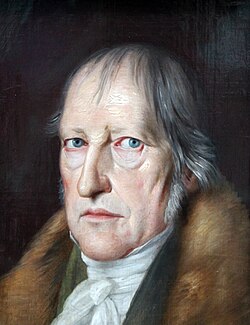
Thematic Overview

The Hegelian themes below are tightly connected. Recognition leads to labour; labour leads to objective spirit; objective spirit leads back to language, institutions, and life. For that reason, Hegel is useful in AI debates not because he supplies a checklist, but because he keeps asking what has been abstracted away when intelligence is treated as computation alone.

Recognition and the Master–Slave Dialectic

Recognition (Anerkennung) is the most widely applied Hegelian resource in this literature. It lets authors ask whether human-machine relations are merely instrumental, or whether they reshape the social scene in which subjects seek acknowledgement. Coeckelbergh (2015), Gertz (2016, 2018), and Nørskov & Nørskov (2019) use the master–slave dialectic to think through automation, social robots, and dependency. Waelen & Wieczorek (2022) bring the question into algorithmic bias by reading it as structural misrecognition through Honneth. Cunningham (2024) finds the same drama in android fiction, while Ma's After Recognition (2026) ties recognition to capital and AI mediation.

Dialectics as a Computational Method

A newer strand asks whether dialectic is not only a way to interpret AI, but something that can be implemented. Hu (2025) formalizes Hegelian logic as an optimization dynamic for concept formation; Abdali et al. (2025) build thesis-antithesis-synthesis reflection into LLM pipelines; and Woods (2025) reads prompting as determination emerging from the indeterminate, though only under the sign of "proxy teleology." Gangle (2022) and Gibeily (2024) connect recollection and the Phenomenology to backpropagation and free-energy minimization. What is at stake is not the old caricature of dialectic as a three-step recipe, but whether negation, recursion, and revision can be treated as computational virtues without losing their philosophical force.

Spirit, Subjectivity, and the "Hegel Test"

The question of spirit is the sharpest version of the Hegelian challenge. Plevrakis (2024) places current AI below will and practical consciousness, even while granting that it may deserve the name "artificial intellect." Bartonek (2026) and Thamrin (2026) propose Hegelian alternatives to the Turing test, built around recognition, labour, and self-negation rather than imitation. Magee (2026) operationalizes recognition in tutoring systems. Žižek (2023, 2024), by contrast, insists that chatbots lack the negativity and self-relating finitude that constitute Geist. The 2026 Munich conference takes up precisely this unresolved point: a machine may produce language, but does it stand in a history of self-formation?

Language, Inferentialism, and Geist

Hegelian work on language gives the AI debate a social account of meaning. Brandom's A Spirit of Trust (2019) reconstructs Geist as a practice of giving and asking for reasons, while Negarestani's Intelligence and Spirit (2018) extends that normative picture toward AGI. This matters for LLMs because language competence can look like understanding even when the system has no stake in the norms it tracks. Malík & Hubálek (2025) ask what LLMs can be as discursive agents bound by normative practice. Weatherby's Language Machines (2025) pushes the point culturally: generative AI may be less a new mind than a new machine for reorganizing linguistic and symbolic life.

Labour, Capital, and the Political Economy of Automation

The Hegelian-Marxist line treats AI as objectified knowledge and labour rather than as disembodied intelligence. Pasquinelli (2023), Steinhoff (2021), and Dyer-Witheford et al. (2019) read machine intelligence through command, social abstraction, and the "general intellect." Biondi (2023), More (2024), and Omodeo (2024) develop the themes of alienation and abstraction; Vredenburgh (2022), Bock (2021), and Delhey (2018) connect mechanized labour to the loss of Hegelian freedom; and Sidorkin (2024) asks whether alienation might also have a liberatory side. Berry (2025) and Pahlevan (2025) carry the critique into cultural production and generative art. The recurring claim is that AI does not simply replace labour. It reorganizes the social form in which labour appears.

Technology, Objective Spirit, and the Cybernetic Genealogy

Another cluster starts from the fact that, for Hegel, spirit is not hidden inside individuals alone. It is also embodied in institutions, practices, tools, and forms of shared life. Kislev (2020) and Juchniewicz (2018) reconstruct a Hegelian metaphysics of tools and machines; Gransche (2019) and Crisafi & Gallagher (2010) treat objective spirit as a cognitive and design problem; and Hui (2019, 2024) develops recursivity into a politics of machine and sovereignty. Weatherby (2018) and van Tuinen (2020) add the historical dimension by tracing, respectively, the path from Hegel to computing and the rivalry between Hegelian and Leibnizian images of AI. The point is that technology is not external to spirit. It is one of the places where spirit becomes objective — and therefore one of the places where it can go wrong.

Life, Mind, and Mechanism

Finally, Hegelian AI repeatedly returns to the question of life. Winfield (2009, 2015) gives the strongest negative answer: mechanism cannot become mind because mind presupposes self-determining organic life. Ng (2020) and Suther (2023) develop a related thought when they argue that genuine intelligence would require artificial life, not merely artificial cognition. Crisafi & Gallagher (2010) and Marchetti & Koster (2014) explore embodiment and intersubjectivity, while Malabou (2019) uses plasticity to loosen the boundary between natural and artificial brains. This is where the Hegelian critique is most basic. If intelligence is a form of living self-relation, then an artificial intelligence that is only mechanism has not yet reached the problem it claims to solve.

Created by

My name is Christian Gleitze. I maintain Hegel and AI as an independent research guide for people interested in Hegelian Philosophy of Artificial Intelligence.

Suggestions, corrections, and pointers to relevant new publications are welcome. Send me an e-mail to connectingdotscoding[at]gmail[dot]com. You can find out more about me at christiangleitze.com.